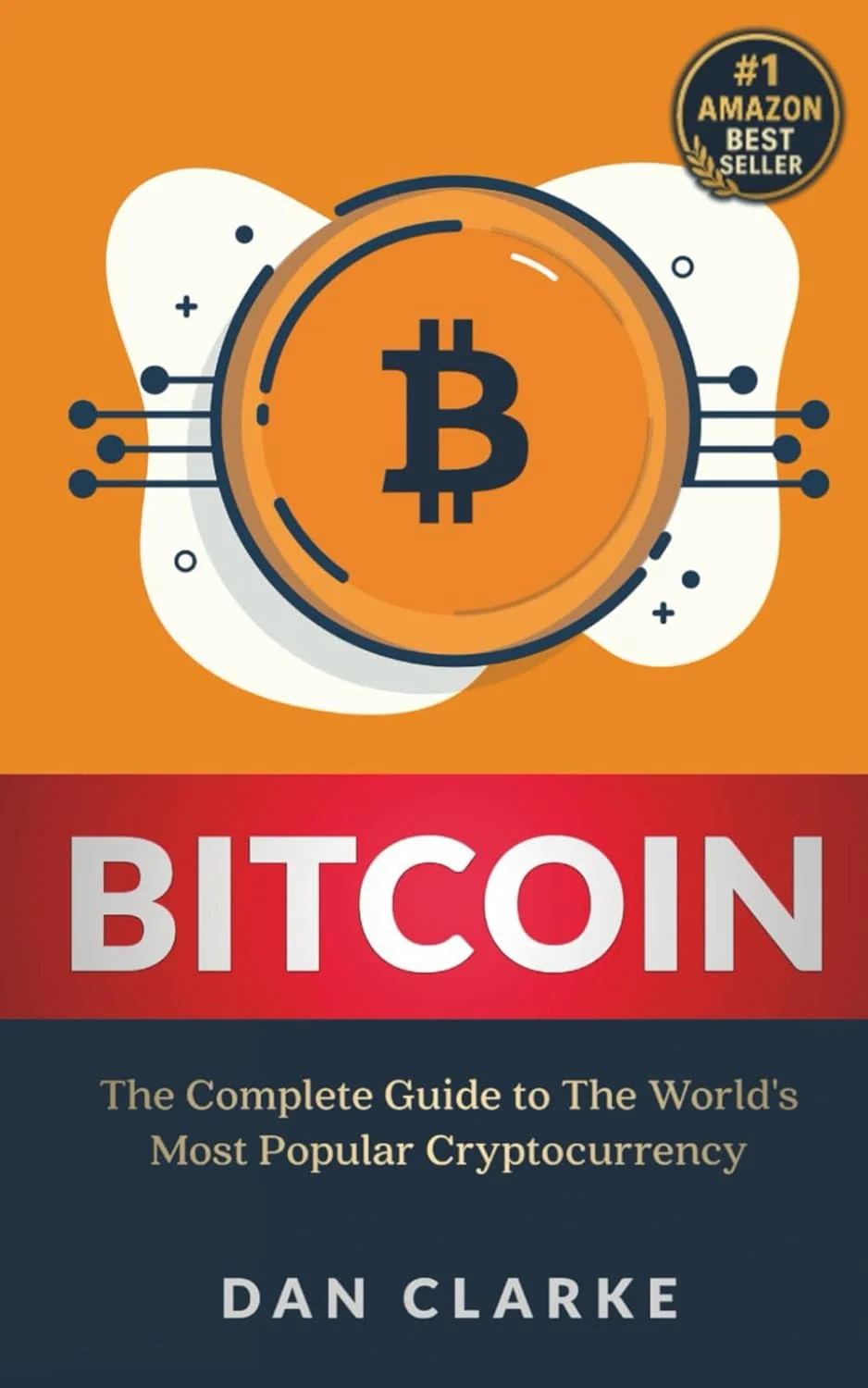
Bitcoin,properlyexplained
One book covering Bitcoin from its economic, political and technical points of view. From the basics to a deep, practical understanding, written for anyone who wants the whole picture rather than the price chart.
Prefer to pay with Bitcoin? Buy directly with crypto.
Now also in Deutsch · Español · 日本語 · Bahasa Indonesia.
Block height
967,665estimated
Coins issued
20.09Mof 21M, ever
Next halving
~82,335 blocksto block 1,050,000
Written from seven years inside the industry, including leading content at Binance Academy. No cheerleading, no price talk: how it works, why it exists, what it might become.
First, money
You cannot understand Bitcoin until you understand the problem it answers. Chapter 1 starts there, with the strange collective fiction the world runs on.
From Chapter 1: What is Money?
What is money? On its surface, this sounds like a stupid question. Everyone knows what money is: the numbers beaming back from your banking app, the notes folded in your wallet. But what is money?
At its heart, money is nothing more than a collectively agreed-upon delusion, a delusion society accepts to form the cornerstone of productive commerce and the governance of civilisation as a whole.
A machine for agreement
Strip away the noise and Bitcoin is one idea: thousands of strangers keeping the same ledger, with no referee, and catching anyone who cheats. Three mechanisms make that possible.
One ledger, everywhere
Every full node keeps a complete copy of every transaction since 2009. There is no master copy to corrupt, seize or quietly edit. To rewrite the record you would have to rewrite everyone's record at once.
Blocks, chained by hashes
Transactions are packed into blocks, roughly one every ten minutes. Each block carries the of the one before it, welding history together: touch one block and every block after it breaks.
Proof of work
Miners race to find a rare hash for the next block, burning real electricity to do it. That is : winning costs money, and lying costs the same money for nothing. Honesty is simply the only trade that pays.
Break the hash
SHA-256, the function Bitcoin runs on. Edit the message:
Change one letter and roughly half the output flips. This is the avalanche effect, and it is why history in Bitcoin cannot be quietly edited. The default message is the newspaper headline Satoshi left in the first block ever mined.
Mine a block, right here
Hunt a whose hash starts with enough zero bits:
Attempts
0
Speed
0/s
Elapsed
0.0s
The full mechanics, from keys to consensus: How Bitcoin works.
21,000,000, forever
Central banks meet to decide how much money exists. Bitcoin decided once, in 2008, and wrote it into the software: 21 million coins, issued on a schedule that ends around 2140. No committee can vote it higher.
Each dashed line is a halving: the block reward cut in half, on schedule, every 210,000 blocks. Four have happened exactly as written in 2008. The fifth arrives at block 1,050,000.
Issued so far
20.09M coins · 95.6%
Nominal supply. An estimated 3 to 4 million coins are lost forever, so the real float is smaller.
New coins per block
3.125 BTC
Was 50 in 2009. Halves again to 1.5625 BTC in 2028.
Progress to next halving
Block 967,665 of 1,050,000, expected spring 2028.
Final coin mined
~2140
After that, miners are paid by transaction fees alone.
Every figure, sourced and dated: Bitcoin by the numbers.
Seventeen years on the record
Bitcoin's history is public in a way no other financial system's is: every boom, every fraud, every block, preserved. Thirteen moments that made it, including the ugly ones.
-
31 Oct 2008
Bitcoin whitepaper published
The pseudonymous Satoshi Nakamoto posted 'Bitcoin: A Peer-to-Peer Electronic Cash System' to a cryptography mailing list, describing a decentralized digital currency secured by proof-of-work.
-
3 Jan 2009
Genesis block mined
Satoshi Nakamoto mined block 0, launching the Bitcoin network and embedding the headline 'Chancellor on brink of second bailout for banks' in the coinbase.
-
22 May 2010
Bitcoin Pizza Day
Laszlo Hanyecz paid 10,000 BTC for two pizzas, the first documented purchase of a physical good with Bitcoin and now an annual community celebration.
-
9 Feb 2011
Bitcoin reaches dollar parity
Bitcoin's price reached parity with the US dollar (1 BTC = $1) for the first time.
-
28 Nov 2012
First Bitcoin halving
At block 210,000 the block reward dropped from 50 BTC to 25 BTC, the first of Bitcoin's scheduled reductions in new supply.
-
28 Feb 2014
Mt. Gox collapses
Mt. Gox, then handling most Bitcoin trades, halted withdrawals and filed for bankruptcy after losing roughly 850,000 BTC to theft.
-
17 Dec 2017
Bitcoin nears $20,000
Bitcoin peaked at about $19,783, capping a roughly 20x run during 2017 before a long bear market began.
-
7 Sep 2021
Bitcoin becomes legal tender in El Salvador
El Salvador's Bitcoin Law took effect, making it the first nation where Bitcoin was legal tender alongside the US dollar, backed by the state-run Chivo wallet.
-
11 Nov 2022
FTX collapses
The FTX exchange filed for bankruptcy after an ~$8 billion shortfall was exposed, sending Bitcoin to multi-year lows and badly damaging industry trust.
-
10 Jan 2024
SEC approves spot Bitcoin ETFs
The SEC approved 11 spot Bitcoin ETFs from issuers including BlackRock, Fidelity and Grayscale; they began trading the next day with record volumes.
-
5 Dec 2024
Bitcoin crosses $100,000
Bitcoin surpassed $100,000 for the first time amid post-election optimism and strong spot-ETF demand.
-
6 Mar 2025
US Strategic Bitcoin Reserve created
President Trump signed an executive order establishing a Strategic Bitcoin Reserve, to hold bitcoin seized in federal cases as a long-term reserve asset, plus a broader digital-asset stockpile.
-
Jun 2026
Bitcoin enters a deep bear market
Bitcoin fell roughly 50% from its 2025 record to a 21-month low near $58,000, pressured by a hawkish Federal Reserve outlook, new US tariffs, and heavy deleveraging.
All 75 events, sourced: the full Bitcoin timeline. The disasters have their own page: every major hack, collapse and fraud.
Thirteen chapters, the full story
The book runs the whole arc, and each chapter became a free in-depth article. Start reading now; buy the book if you want it properly told.
What readers say
An excellent guide for anyone looking to understand Bitcoin, exactly what I needed as a beginner. It breaks down everything in simple language, and it is clear the author knows his stuff. Definitely recommend, whether you are just starting out or want to deepen your knowledge.
Solid read with enough detail for students of crypto. Rare to see cool anecdotes from Asia.
A great introduction to Bitcoin history, including the highs and lows and the very scammable environment around it.
All quotes are from public Amazon reviews. Read every review, including the critical ones.
Get the book
$14.99 paperback · $3.99 ebook
Everything on this page is the short version. The book is the long one: thirteen chapters, no cheerleading, written to be the only Bitcoin book you need.
Read a free chapter first · also in German, Spanish, Japanese, Indonesian

About the author
Dan Clarke found Bitcoin in Singapore during the 2017 bull run and has worked in the industry ever since, most of it running education for the world's biggest exchange and making crypto make sense to millions of first-time readers.
More about DanContact the author
Questions about the book, bulk orders, press or speaking: send a message and it lands directly with Dan.